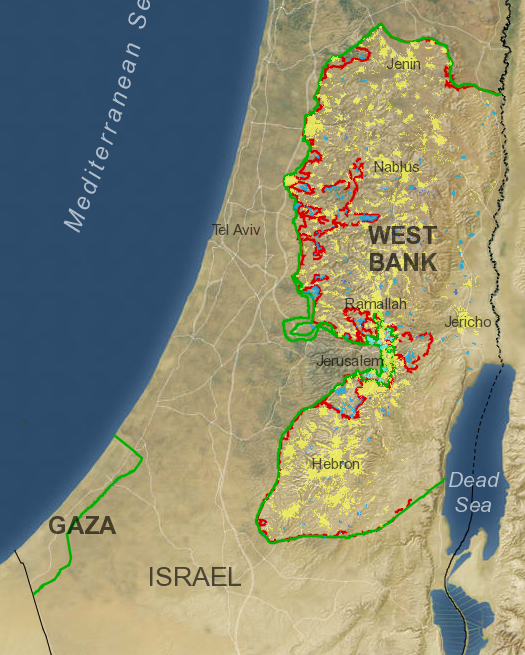
The following piece has emerged as the result of a week-long trip I took to Israel and the West Bank earlier this month, during which I had the opportunity to meet with a number of leaders and decision makers on both sides of the conflict and to hear their thoughts on where prospects for peace and the resumption of Israeli-Palestinian talks currently stand.


Prospects for the Resumption of Israeli-Palestinian Peace Talks

By David Makovsky
January 15, 2010

U.S. Middle East peace envoy George Mitchell will return to the region next week in a bid to restart talks that have been stalled since the beginning of the Obama administration. In a television interview earlier this month, Mitchell declared that he would like to complete peace talks between Israel and the Palestinians within two years, if not sooner. Senior U.S. officials, including President Obama, have called for an unconditional return to the negotiating table. The official position of Palestinian president Mahmoud Abbas is that talks cannot resume until Israel extends its settlement moratorium to east Jerusalem. He also wants the pre-1967 boundaries to serve as the baseline for negotiations. At the same time, he has made a statement indicating that he regrets how he reached his current position, hinting that the current impasse does not serve the Palestinian people’s interests. Is there more convergence between the two sides than is readily apparent?

Context of the Current Impasse

Peace talks have remained elusive since the first day of the Obama administration due in large part to the handling of the settlements issue. For much of 2009, the U.S. position was that Israel should not only avoid expanding settlement activity, but also freeze construction within existing settlements. Although the Obama administration insists that it never wanted a freeze to be a formal precondition for peace talks, its preferences became a de facto requirement from the Palestinian perspective. In short, Abbas felt boxed in when the administration stated its maximalist position but then sought to negotiate a ten-month, limited moratorium with Israel. He explained the problem in a little-noticed December 22, 2009, interview with the London-based pan-Arab daily al-Sharq al-Awsat, where he blamed Washington for putting forward the freeze idea and then asking him to compromise. He recalled telling U.S. officials during a September meeting at the UN, “You put me on top of a tree, and now you ask me for a solution, and to climb down.” Abbas continued, “Obama laid down the condition of halting the settlements completely. What could I say to him? Should I say this is too much?”

Meanwhile, Israel has also backed off from several positions unfavorable to the resumption of talks. For example, Prime Minister Binyamin Netanyahu originally held that there should be no further talks until the United States found a way to halt the Iranian nuclear program. He also opposed the creation of a Palestinian state. Over the past few months, however, he has adjusted his stance, endorsing statehood, abandoning the Iranian requirement, and insisting to Washington that no Israeli leader has supported a settlement moratorium to the extent he has.

(more…)

David’s interview with BBC yesterday, commenting on PM Netanyahu’s announcement of a 10 month settlement freeze in the West Bank and the U.S. response to that announcement by George Mitchell, can be watched at:

http://mms.tveyes.com/MediaCenter/20230/390287.6233/BBC24_11-25-2009_20.33.44.wmv.

Obama and Netanyahu: Lessons of 2009
by David Makovsky

WASHINGTON – The announcement of a moratorium on building in the settlements ends the first chapter of U.S.-Israel relations during the Obama era. There are lessons for all.

The move by Prime Minister Benjamin Netanyahu is clearly a bid to improve U.S.-Israel relations as much as it is an effort to restart negotiations with the Palestinians. It may also be a counterbalance toward Palestinian President Mahmoud Abbas, against a potential prisoner swap with Hamas for Gilad Shalit.

Much of this year has been defined by the friction over settlements, which have cast a shadow. The Obama administration feels it does not always receive credit from Israel regarding close bilateral consultations on a range of issues including the Iranian nuclear threat, the Operation Juniper Cobra military exercise and the Goldstone report.

There were profound implications for the United States in setting the bar high on the settlement issue by calling for a construction freeze rather than merely no outward expansion of settlements. One lesson is that even if the Israeli opposition cannot say “yes” to Barack Obama, the United States has lost mainstream Israelis.

(more…)

David yesterday published an opinion piece entitled “Different Perspectives” analyzing the potential prisoner swap deal for Gilad Shalit in the New York Times’ opinion blog “Room for Debate”, alongside Op-Ed articles by Daniel Gordis, Daoud Kuttab, and others.

Different Perspectives
David Makovsky

With the help of German and Egyptian mediation, Israel and Hamas are trying to broker a deal that would end the 3 1/2-year captivity of Gilad Shalit, reportedly in return for the release of hundreds of Palestinian prisoners. In Israel, there are four different clusters of policymakers weighing the move. Their interests may vary, even though outwardly they will present a united front.

The first group is the cabinet. These are politicians who have born the brunt of the public campaign urging that anything and everything be done to ensure Sergeant Shalit’s release. This public campaign for one soldier’s release has been huge, which is not surprising in a small country where army service is compulsory and many parents feel that it could have just as easily been their son captured. Thus, these elected politicians will support a deal for Sergeant Shalit, as they tend to be the most sensitive to public opinion and will put a premium on the political windfall that could accrue to them.

To read the whole piece, alongside other commentary on the Shalit prisoner exchange, click here

David’s latest Op-Ed on the challenges Hamas poses to peace between Israel and the Palestinians:

The Palestinians’ spoiler
http://www.haaretz.co.il/hasen/pages/ShArtStEngPE.jhtml?itemNo=1123062&contrassID=2&subContrassID=4&title=%27The%20Palestinians%27%20spoiler%20%27&dyn_server=172.20.5.5.

Advocates for engaging Hamas often argue that if the group is given a stake in the creation of an independent Palestine by being included in peace negotiations, it will moderate its positions. This co-optation argument is based on the misguided assumption that Hamas is a pragmatic nationalistic movement, motivated primarily by calculations of how to gain power.

However, Hamas is ideologically motivated, and misunderstanding its worldview is damaging. The growing Islamification of Gaza is only one example of Hamas’ persistent allegiance to its ideological underpinnings, which it has shown no signs of abandoning. Hamas’ ideology is rooted in the philosophy of its parent movement, the Muslim Brotherhood.

(more…)

Clinton’s Middle East message seems to misfire

by Laura Rozen
11/01/10

…another Washington Middle East hand said the Obama administration had no choice but to start backing itself out of its own corner in the form of a drawn-out fight with the Netanyahu government on a full settlement freeze to try to get to the main event. “It was the policy of the early months of the Obama administration that boxed in Abu Mazen,” said the Washington Institute for Near East Policy’s David Makovsky, co-author with the National Security Council’s Dennis Ross of a new book, “Myths, Illusions, and Peace.”

“Once the U.S. said ‘freeze,’ it raised Arab expectations to such a point that Abu Mazen could not agree to less. He cannot be more of a Zionist than the U.S. There have been consequences for the early approach. If the Obama administration would have said no geographic expansion of settlements from the outset instead of saying freeze, we would not have lost eight months of time and wasted the political capital of the president. President Obama would not have been at single digits in Israeli polls, and Abu Mazen would not have been out on the limb. Critically, Israeli-Palestinian negotiations would have most likely already commenced.

“Now the dynamic will be driven by whether there is a Palestinian election or not,” Makovsky continued. “A law of Mideast peacemaking is that compromises do not occur during a Palestinian or Israeli election campaign. If Abu Mazen heads for elections, he will find it convenient not to budge so he can flex his nationalist muscles. If this is his intention, Obama administration peacemaking will be on hold until the Palestinian elections end in early 2010.”

Click here to read the article in full

An extensive article published in the Jerusalem Post this weekend examined David Makovsky’s thoughts on the Middle East and the peace process as it stands today. It also looks at the themes and impact of Myths, Illusions, & Peace. Here’s a quote from the article:

Seizing the moment
by Haviv Rettig Gur

Myths, Illusions and Peace is at its core an argument against the theory that has been popular for many years among Arabists and policy wonks in Washington, one repeated by too many Arab leaders to ignore: That the Middle East’s deep and abiding tensions draw much of their energy from the conflict with Israel, and specifically the unfair fight between Israel and the Palestinians.

This argument has profound ramifications for policymaking. Linkage can harm peace, as in the initial reluctance of the Carter administration to help launch the Israeli-Egyptian peace process because they were not convinced that Sadat’s idea to break with the Arab consensus could work.


Click here to read the article in its entirety.

How Obama Could Earn His Nobel Prize
By Joe Klein
October 15th, 2009

The Nobel Peace Prize, presented prospectively — a triumph of hope over inexperience — threatens to become a central metaphor of Barack Obama’s turbocharged political career. He seems fated to be feted for who he is not (George W. Bush) and who he might turn out to be, but not for things he has actually done. This is dangerous stuff, politically. It almost guarantees disappointment. So the prize presents him with an immediate challenge: How does he go about actually earning it? The foreign policy that Obama favors, patient diplomacy on a multitude of fronts, requires qualities of wisdom, horse-trading and fortitude that we can’t yet be sure he possesses. Nor does it lend itself to high drama; it is more often about the slow reduction of tensions, or the creative stalemate that prevents things from getting worse, than about Nixon going to China.

Click here to read the full story.

Author David Makovsky Talks About His Book Myths, Illusions, and Peace: Finding a new Direction for America in the Middle East

Author and analyst David Makovsky speaks with host Carol Castiel and VOA correspondent Meredith Buel about his new book Myths, Illusions, and Peace: Finding a new Direction for America in the Middle East. Drawing on more than 25 years of combined experience, he and co-author Dennis Ross, veteran peace negotiator under Presidents George H. W. Bush and Bill Clinton, critique assumptions that have guided policy for the past 60 years and recommend a fresh approach based on realities of the region.

Airdate: 10 Oct 2009

Click here to listen to the full interview.

The American University website put up a summary of David’s September 16th talk with Hisham Melham at AU’s Center for Israeli Studies. Hisham and David discussed not only Myths, Illusions, & Peace, but also a wide range of Middle Eastern topics. Here’s a quote from the summary:

Responding to probing and nuanced questions from Melham, the Washington bureau chief for Al Arabiya who was the first person to interview President Obama after his inauguration, Makovsky discussed his new book, Myths, Illusions, and Peace: Finding a New Direction for America in the Middle East.

“People look at the Middle East from 50,000 feet in the air,” said Makovsky, Ziegler Distinguished Fellow of the Washington Institute for Near East Policy. “From 50,000 feet, everything looks very clear. The realists tend to say, ‘Just impose peace.’ The neoconservatives say, ‘Just impose democracy.’ We think there are a lot of maladies and dysfunctions in the Middle East that have nothing to do with the Arab-Israeli conflict. We don’t deny that this issue is evocative; we just have our doubts that it will solve the other conflicts. Will it have side benefits? Yes, but the Iran nuclear ascendance will retain its power, the sectarian problems in Iraq will continue. We shouldn’t oversell it.”

To read the entire piece, click here.

What Shapes Sanctions
Our next Iran policy emerges.

By David Makovsky

The announcement that Iran has been constructing a covert facility to enrich nuclear fuel for the last few years without notifying the International Atomic Energy Agency (IAEA) raises the stakes for the upcoming October 1 meeting of six leading countries with Iran. The underground facility is located on an Iranian Revolutionary Guard base outside the religious city of Qom.


To read the full article click here

KCBS News Interviews and Analysis
September 22nd, 2009

Middle East Peace Talks
David Makovsky of the Washington Institute for Near-East Policy discusses President Obama’s meeting with Israel’s prime minister and the Palestinian president today.

To listen to the full audio interview click here

Obama Says Israel, Palestinians Must Act With Urgency

At the start of his first joint meeting with Palestinian Authority President Mahmoud Abbas and Israeli Prime Minister Benjamin Netanyahu, Obama said his special envoy, George Mitchell, will meet with Palestinian and Israeli negotiators next week. Secretary of State Hillary Clinton will report on the status of those efforts next month, he said in New York.

By Kate Andersen Brower and Jonathan Ferziger
September 22nd, 2009

David Makovsky, a fellow at the Washington Institute of Near East Policy, said the three-way meeting is a “good first step.”

“You obviously cannot have negotiations unless you can get Netanyahu and Abbas in the same room. With the ice broken, hopefully the diplomatic thaw is now possible,” said Makovsky, co-author of a book on Middle East peacemaking with Obama’s senior adviser on the region, Dennis Ross.

To read the full article click here

All parties downbeat ahead of Mideast summit

US President Barack Obama will Tuesday use his diplomatic leverage to get Israeli and Palestinian leaders together in the same room, but the White House has no illusions of an imminent breakthrough.

By Laurent Lozano
September 21st, 2009

“The expectations have plunged lower than the Dead Sea” said David Makovsky of the Washington Institute for Near East policy.

Nevertheless, he said that the three-way link-up to break the ice between Netanyahu and Abbas was still worthwhile.

“This is a necessary first step, it’s an important first step.”

“It makes things possible that were not possible until now,” said Makovsky, co-author with Obama’s Middle East advisor Dennis Ross of the book “Myths, Illusions, and Peace: Finding a New Direction for America in the Middle East.”

To read the full article click here

U.S. Envoy’s Push in Middle East Yields Little

George J. Mitchell leaves the region after six days of talks without key concessions from Israel or the Palestinians. President Obama had hoped to unveil a regional peace initiative next week.

By Richard Boudreaux and Paul Richter
September 19th, 2009

David Makovsky of the Washington Institute for Near East Policy said the administration contributed to the standoff by raising Palestinian and Arab expectations that Netanyahu would accept a total settlement freeze.

“Now it has the unpleasant task of telling Abbas that this may be the best that could be achieved, and maybe it’s time to move on to the next phase.” Abbas “now feels that he’s stuck in a box,” Makovsky said.

To read the full article click here

Beyond Settlements: U.S. Policy Options Going Forward

By David Makovsky
September 16, 2009

Having raised Arab expectations months ago with the idea of a settlement freeze, the Obama administration now has the unpleasant task of coaxing Palestinian Authority (PA) president Mahmoud Abbas to tacitly accept an agreement on settlements that offers less than expected — if more than was offered in the past. Therefore, it is uncertain whether the United States will succeed at arranging a trilateral summit involving President Barack Obama, President Abbas, and Israeli prime minister Binyamin Netanyahu at the UN next week that would culminate in the announcement of a formal relaunching of peace negotiations.

An agreement on settlements would likely involve a nine-month moratorium on construction, with the exception of the 2,500 partially built units as well as public or nonresidential buildings. Israel’s decision not to enact a more comprehensive settlement freeze was made somewhat easier by Saudi Arabia’s repeated and pointed rejection of any confidence-building measures until Israel conforms with its backloaded 2002 Arab Peace Initiative. The Saudi plan unrealistically requires Israel to withdraw completely from the West Bank, East Jerusalem, and the Golan Heights before Riyadh takes any reciprocal steps. Assuming that the United States, Israel, and the PA strike an settlement agreement this week or in the near future, which U.S. policy options will determine the direction and shape of the main event — the Israeli-Palestinian peace negotiations?

(more…)

Why Walt, Mearsheimer, Still Wrong

By David Makovsky

Tuesday, September 8th, 2009

On the second anniversary of the publication of the highly controversial book, “The Israel Lobby and U.S. Foreign Policy,” written by University of Chicago’s John Mearsheimer and Harvard University’s Stephen Walt, it is worth noting that their central thesis — that Israel is a strategic liability and not an asset to the U.S. — is erroneous, as evident from examining the Mideast situation today.

While Mearsheimer and Walt concede that during the Cold War Israel may have been an asset to the United States, they suggest that in the post-Cold War period and certainly after 9/11, whatever value it had has long since been replaced by costs. Their argument is that securing oil and good relations with the Arab world should be the primary U.S. goal in the Middle East, and our association with and strong support for Israel impede this aim.

Specifically, they write that Arab and Muslim antipathy toward the United States results from their identifying the United States with Israel.

But the Mideast is far more complex than they appreciate. Not only has the U.S.- Israeli relationship not been a liability for either country, it has been, at least to some extent, an asset to the Arab regimes, as a strategic counterweight to radicalism.

To read the full article click here


 Click here to buy the book from Amazon

ross_makovsky_book

Excellent book for understanding U.S. Mideast policy, July 12, 2009
By Repps Hudson “Jazz all the time” (University City, MO) -
“I have followed the Middle East for many years, since the Israeli invasion of Lebanon in June 1982. American policy has waxed and waned, and Dennis Ross and David Makovsky review U.S. policy toward the region — not just the Arab-Israeli conflict — since the FDR administration.
Their level-headed approach is a useful guide to understanding the key issues, such as respect for sovereignty, what to do about radical Islamists and authoritarian leaders, the Irsaeli-Palestinian conflict and so on.
So many people do not understand the complex politics of the regional players, yet they are quick to blame and condemn one group or another.
Ross and Makovsky say, in effect, “Take a deep breath, count to 10 and make the effort to understand the history and the cultures and the religions of the area.”
Good advice. Their lack of dogmatism is somewhat unusual and quite welcome.”

(more…)

Chapter Nine

(page 221-222)

     “There clearly is room to do much more to tighten the economic noose around Iran and sharpen the choices the Iranian leadership must make. Not everything need be done through United Nations Security Council resolutions – indeed, that route has probably already been exhausted. Formal and informal sanctions, informal jawboning, and finding ways to get the Saudis to use their clout could all add to the pressures.
(more…)

Michael Crowley: Why The U.S.-Saudi Relationship Threatens To Become A Debacle

(The New Republic) At a world economic summit in London this April, Barack Obama had his first encounter with the king of Saudi Arabia, Abdullah bin Abdul Aziz. With TV cameras rolling, Obama strode up to the elderly Saudi monarch, extended his hand, and smiled broadly as he bent at the waist in a swift but unmistakable bow. As the image rocketed around the Internet, the White House was quick to insist that the move had not been one of supplication. “It wasn’t a bow,” one aide told Politico at the time. Obama had simply lowered his head in conjunction with the handshake because “he’s taller than King Abdullah,” the aide said.

The explanation was totally implausible. But Obama’s (presumably instinctive) gesture was understandable. Perhaps no one is more important to the success of his foreign policy agenda than the king. Consider the list: Iran, Iraq, Afghanistan and Pakistan, Guantanamo, terrorism, the global economy, Middle East peace–on each of these issues, the Saudis play a vital role. “Saudi Arabia is a nexus,” says one administration official. “It’s a big deal on everything.”

That’s why Obama has put considerable work into building a rapport with Abdullah. In addition to the London meeting, he has spoken to the king at least twice via telephone, and, the day before his June 4 speech in Cairo, he visited Abdullah’s farm outside Riyadh, where the king hung a gaudy gold necklace around the bemused president’s neck before the two held private talks. George W. Bush, by contrast, didn’t travel to the kingdom until 2008 and had just four state visits with Abdullah in eight years. “The king is old school,” says a senior White House official. “He likes to do things face-to-face. For him, it all begins and ends with the personal relationship. Before you can get to the substance, you have to work on that relationship.”

To read the full article click here

We Read it So You Don’t Have to

‘Myths, illusions & peace’

NEWSWEEK
Published Aug 15, 2009
From the magazine issue dated Aug 31, 2009

In the Middle East, myths have a way of stubbornly clinging to life. A new book by two experts, Dennis Ross (back in government after an eight-year hiatus) and David Makovsky, lays out the region’s most tenacious falsehoods—and explains how the United States has been misled by them. Their four main points:

The notion that resolving the Israeli-Palestinian conflict will cure the entire area’s dysfunction is wrong. Most Arab problems have nothing to do with Israelis and Palestinians, and will fester long after any peace agreement between the two sides.
To read the full article click here

“Ross and Makovsky are superb guides to the political bazaar known as the Middle East. Myths, Illusions, and Peace sheds new light on old dilemmas at a moment when fresh approaches to the Middle East are urgently needed, widely desired, and genuinely possible. This is a book written to be appreciated by experts and novices alike.”
Madeleine K. Albright, U.S. Secretary of State, 1997-2001

“This book is like an advanced course in Middle East politics. Whether you are an expert or not, you will learn a lot and gain fresh understanding about a range of difficult issues. Besides the many insights of the book, what emerges is that the authors share a belief in Middle East peace.”

—Abdul Rahman Al-Rashed,
Head of Al-Arabiya Arab Satellite Television Network


“This compelling book is an insightful testament to the authors’ profound grasp of Middle East history and its development into today’s contemporary reality. By dispelling myths that have captivated too many for too long in our region and beyond its shores, they bring to their analysis much needed fresh focus and lucid thinking, a significant contribution to building a better future for all the peoples of the Middle East.”

—Shimon Peres, President of Israel


“I rely on the work of Dennis Ross and David Makovsky for deep strategic thinking. I value their research and analysis. I consider their work a national treasure of the United States.”

—Lieutenant General Keith W. Dayton,
United States Security Coordinator for Israel and the Palestinian Authority


“Ross and Makovsky cogently blend the experience of diplomacy with the clarity of seasoned expertise. Anchored in astute political analyses, their book not only debunks widely and wildly held myths inherent in the Middle East’s msot daunting issues, it offers clear prescriptions for this and future administrations. A mandated read for students, diplomats, and presidents alike.”

—Kenneth W. Stein, William E. Schatten Professor of Contemporary Middle Eastern History and Political Science, Emory University

Current Show

Week of August 2, 2009

Segment 1: The Myths that Guide US Policy in the Middle East

Why has the United States consistently failed to achieve its strategic goals in the Middle East? According to David Makovsky and Dennis Ross, Myths, Illusions, and Peace: Finding a New Direction for America in the Middle East, two experts on the region, it is because we have been laboring under false assumptions, or mythologies, about the nature and motivation of Middle East countries and their leaders.

To listen to the audio interview click here

Netanyahu calls Gaza withdrawal ‘a mistake’

Emile Hokayem and Richard Pretorius

Last Updated: August 10. 2009 2:17PM UAE / August 10. 2009 10:17AM GMT

Benjamin Netanyahu, the Israeli prime minister, yesterday said the withdrawal of nearly 9,000 Jewish settlers from the Gaza Strip four years ago was a mistake, bringing mixed reaction from Middle East experts on the significance of his comments to relations with the United States and the peace process.

“We can only conduct genuine introspection and say that the unilateral evacuation from the Gaza Strip brought neither peace nor security,” Mr Netanyahu said at a cabinet meeting yesterday in Jerusalem, according to a transcript e-mailed by his office to news agencies. “We will not repeat this mistake.”

Mr Netanyahu, who quit as finance minister a week before the Gaza withdrawal started in August 2005, under the government of then prime minister Ariel Sharon, said yesterday that agreements that involve ceding territory from now on will require “genuine recognition of Israel” and “security arrangements that can be enforced”.

To read the full article click here

The push for Mideast peace hinges on Benjamin Netanyahu 2.0

By David Makovsky

Sunday, August 9th 2009, 4:00 AM

As Israeli Prime Minister Benjamin Netanyahu recently passed his first 100 days in office, there are early signs that the Israeli leader has evolved since he held the post a decade ago.

This could mean – on the Israeli side at least – a real commitment to a durable peace.

During Netanyahu’s premiership of Israel in the 1990s, he was viewed inside and outside Israel as playing to his conservative base at the expense of the rest of the country. While he did reach some interim agreements with the Palestinians, they were undone – at least in part – because he sought to placate his base. He lost re-election and for the most part proceeded to wander in the political wilderness.

To read the full article click here

Next Page »